
The television landscape has evolved from grainy terrestrial broadcasts to high-definition digital signals beamed via satellite. Today, we are witnessing the next significant leap: the full transition to internet television. At the heart of this revolution is IPTV technology, a sophisticated method of delivering media that prioritizes flexibility, quality, and user control.
For enthusiasts and newcomers alike, understanding the infrastructure behind platforms like IPTV Blueshark is essential. This guide provides a deep-dive into the technical mechanics, the architectural differences between delivery methods, and the security protocols that define modern streaming in the era of Blueshark 4K.
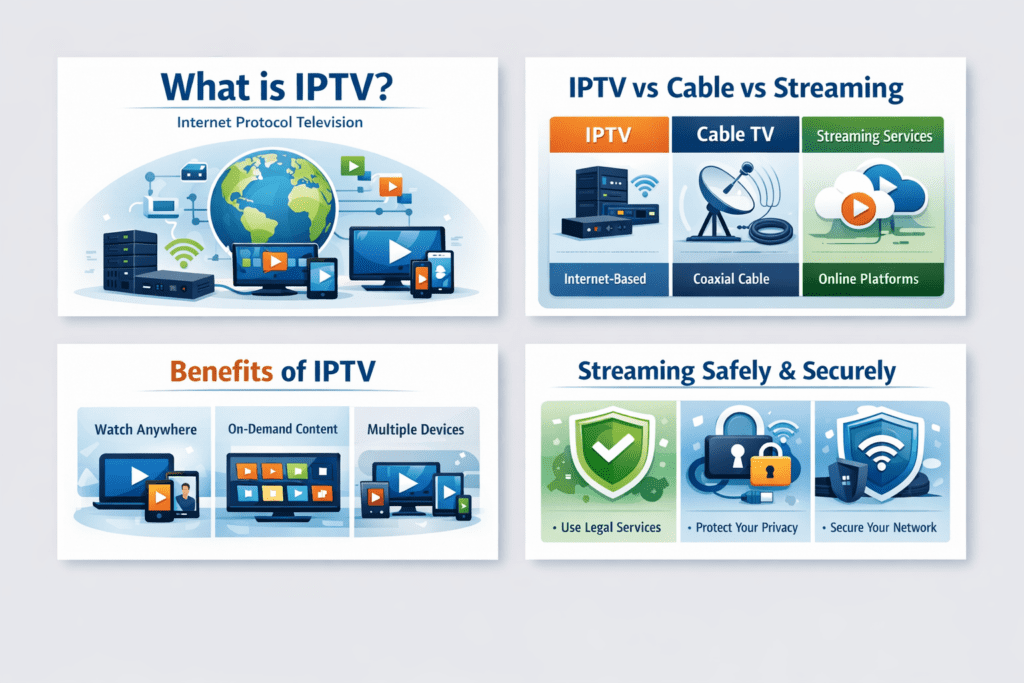
The Comprehensive Guide to IPTV Technology: How Internet Television is Reshaping Media
1. What is IPTV Technology?
IPTV technology (Internet Protocol Television) is a system where digital television services are delivered over the internet using the Internet Protocol (IP) suite. Instead of being delivered through traditional terrestrial, satellite, or cable formats, IPTV allows for content to be streamed continuously in small “packets” of data.
When you use an educational resource like IPTV Blueshark, you are engaging with a medium that functions similarly to how your computer browses the web. The key difference is that IPTV is optimized for high-bitrate video delivery, often supporting advanced resolutions such as Blueshark 4K to ensure a premium viewing experience.
How IPTV Works at a Technical Level
To understand how IPTV works, we must look at the digital journey a video file takes from the broadcaster’s server to your screen.
- Content Acquisition and Encoding: Live feeds or pre-recorded videos are captured. Because raw video files are massive, they must be compressed. Modern systems use codecs like H.264 or the newer HEVC (H.265). The latter is particularly vital for Blueshark 4K content, as it reduces file size by nearly 50% compared to older standards without sacrificing visual clarity.
- IP Multicasting and Unicasting:
- Unicast: Content is sent from the server to one specific user. This is typical for Video on Demand (VoD).
- Multicast: Content is sent once from the source but branches out to multiple subscribers simultaneously. This is the backbone of live internet television, allowing thousands of people to watch a single event without crashing the network.
- The Delivery Network: The encoded packets travel through a Content Delivery Network (CDN). The closer a CDN server is to the user, the lower the latency.
- IPTV Middleware and Decoders: On the user’s end, a software application or a set-top box acts as the “translator,” reassembling the data packets into a seamless video stream.
2. IPTV vs. Cable vs. Streaming: Key Differences
While all three methods put pictures on your screen, the “plumbing” behind them is vastly different. Understanding these nuances is a core part of the IPTV Blueshark educational mission.
Traditional Cable and Satellite
Traditional TV uses a “linear” broadcast model. The provider sends every channel’s signal through the wire simultaneously. When you change the channel, your TV simply “tunes” into a different frequency that is already present in your home. This is inefficient because you are receiving data for hundreds of channels you aren’t actually watching.
OTT (Over-the-Top) Streaming
Services like YouTube or Netflix are technically “OTT” because they ride “over the top” of your existing internet connection without a dedicated managed network. While flexible, OTT can suffer from “jitter” or buffering if the public internet becomes congested.
The IPTV Advantage
IPTV technology often operates on a managed network. This allows providers to implement Quality of Service (QoS) protocols. In a managed environment, video data is prioritized over other types of traffic (like a large file download), ensuring that a Blueshark 4K stream remains stable and buffer-free even during peak usage hours.
3. The Benefits of IPTV as a Technology
The move toward internet television isn’t just about convenience; it’s about the technical capabilities that older hardware simply cannot match.
- Device Compatibility: Because the system is IP-based, it isn’t tied to a specific wall jack. You can transition from a Smart TV to a tablet or a smartphone seamlessly.
- Interactivity: IPTV allows for two-way communication. Users can search for content, pause live broadcasts, or interact with on-screen data in real-time.
- Scalability: Delivering high-fidelity signals like Blueshark 4K is easier over IP because the network can dynamically adjust the bitrate based on the user’s current connection speed.
- Integration: Modern households are connected. IPTV Blueshark users benefit from a technology that integrates with other IP-based home services, creating a unified digital ecosystem.
4. Understanding Streaming Quality: The Rise of Blueshark 4K
The term Blueshark 4K refers to a resolution of approximately 3840 x 2160 pixels. This is four times the pixel density of standard 1080p HD. Delivering this level of detail requires specific technical conditions:
| Technical Requirement | Minimum for 1080p | Minimum for Blueshark 4K |
| Bandwidth | 5-10 Mbps | 25-50 Mbps |
| Codec Support | H.264 | H.265 (HEVC) or VP9 |
| Hardware | Standard Processor | Quad-core / Dedicated GPU |
For a deeper dive into video compression standards, you can consult the Moving Picture Experts Group (MPEG) for official documentation on HEVC.
5. Security and Privacy in the World of Internet Television
As with any internet-connected device, security is paramount. When engaging with IPTV technology, users should be aware of how their data is handled.
Encryption Protocols
Secure streaming platforms use AES-128 or AES-256 encryption to protect the data stream from being intercepted. This ensures that your viewing habits and account details remain private.
The Role of VPNs
Many users of IPTV Blueshark utilize a Virtual Private Network (VPN). A VPN creates an encrypted tunnel between your device and the server. This prevents your ISP from “throttling” your connection (intentionally slowing down video traffic) and adds a layer of anonymity to your online presence.
Basic Security Checklist:
- Use Strong Passwords: Ensure your IPTV middleware accounts use complex, unique passwords.
- Enable Firewalls: A robust firewall on your router can prevent unauthorized access to your local network.
- Update Software: Always keep your streaming apps and device firmware updated to patch potential vulnerabilities.
6. How to Choose a Legal Streaming Service
Navigating the world of internet television requires a focus on compliance. To ensure you are using a legitimate service, look for the following “green flags”:
- Clear Terms of Service: Legal providers have transparent documentation regarding data usage and licensing.
- App Store Availability: Licensed services are usually available on major platforms like the Google Play Store, Amazon Appstore, or Apple App Store.
- Licensing Transparency: Legitimate services will often display their partnerships with content creators or broadcast networks.
For more information on digital copyright and legal frameworks, visit the World Intellectual Property Organization (WIPO).
Conclusion: The Future of Media is Here
IPTV technology has fundamentally changed the power dynamic between the broadcaster and the viewer. Through the innovations showcased by IPTV Blueshark, users are no longer bound by the limitations of physical cables or rigid schedules.
As the infrastructure for Blueshark 4K continues to expand globally, the line between “TV” and “Internet” will disappear entirely. By understanding the underlying technology—from codecs to CDNs—you can make informed decisions and enjoy a safer, higher-quality entertainment experience.
For more technical insights and updates on the evolution of digital media, stay tuned to the educational resources available at IPTV Blueshark.